Eleven months.
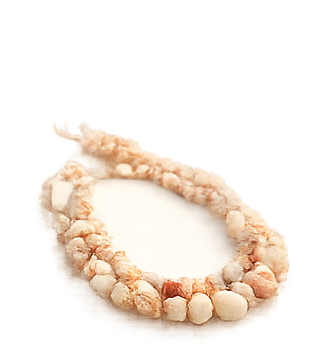
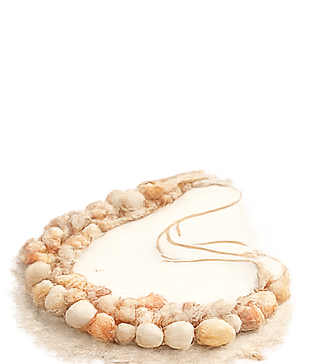
That’s how long it takes to sort, grade, and string a single rope of kahelelani shells from the west side of Niʻihau. Each shell is smaller than a grain of rice. Each one is inspected by hand, held up to the light, tested for color consistency and structural integrity.
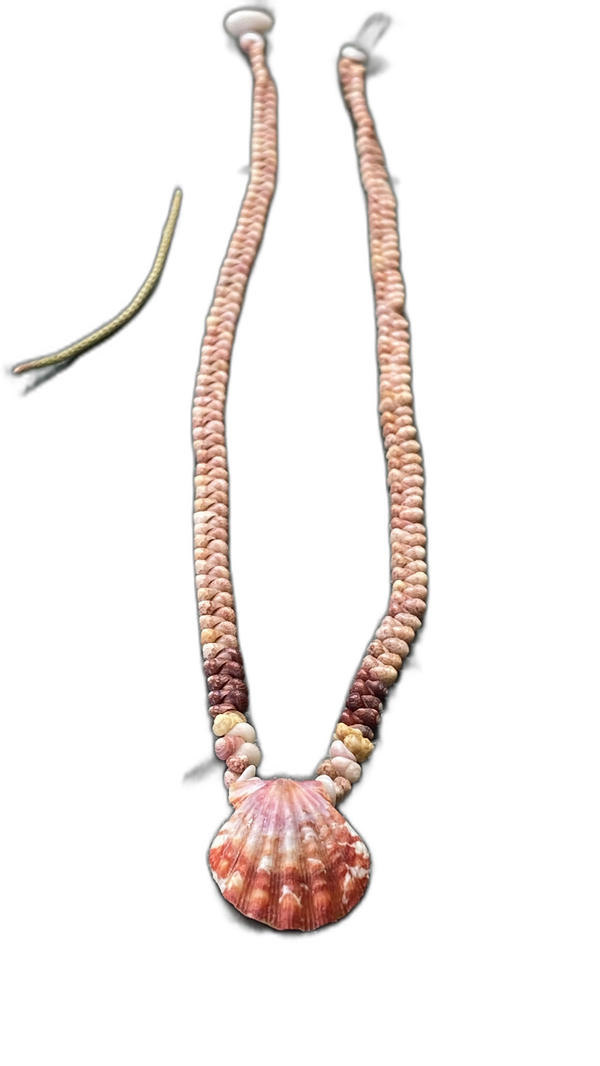
The ones that pass — maybe one in twenty — are pierced with a needle thinner than a human hair and strung on silk thread using a herringbone pattern that dates back centuries.
The Pendant
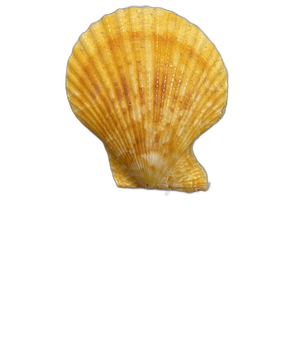
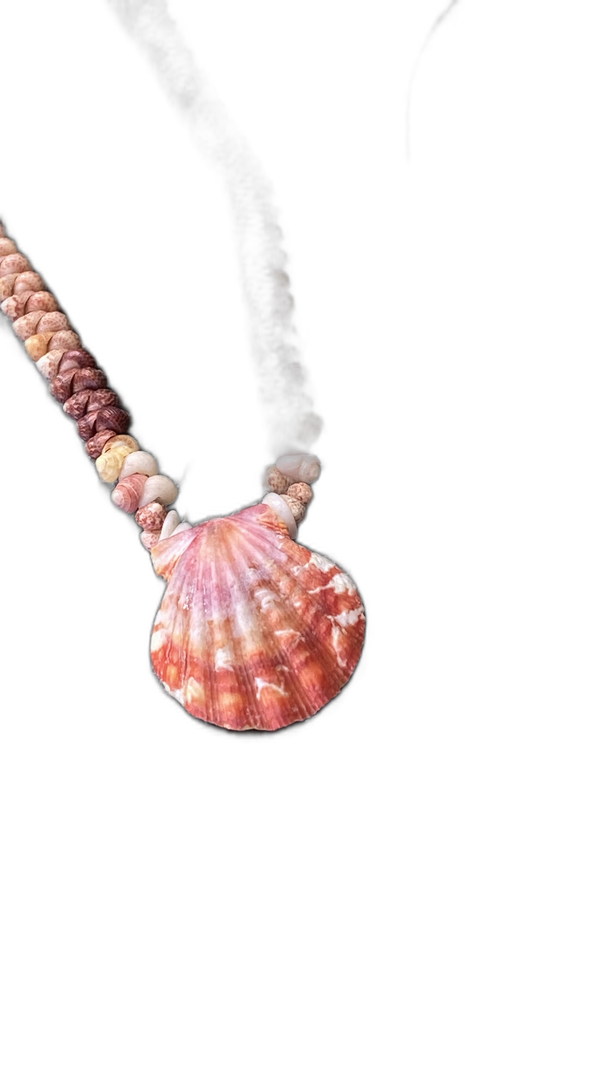
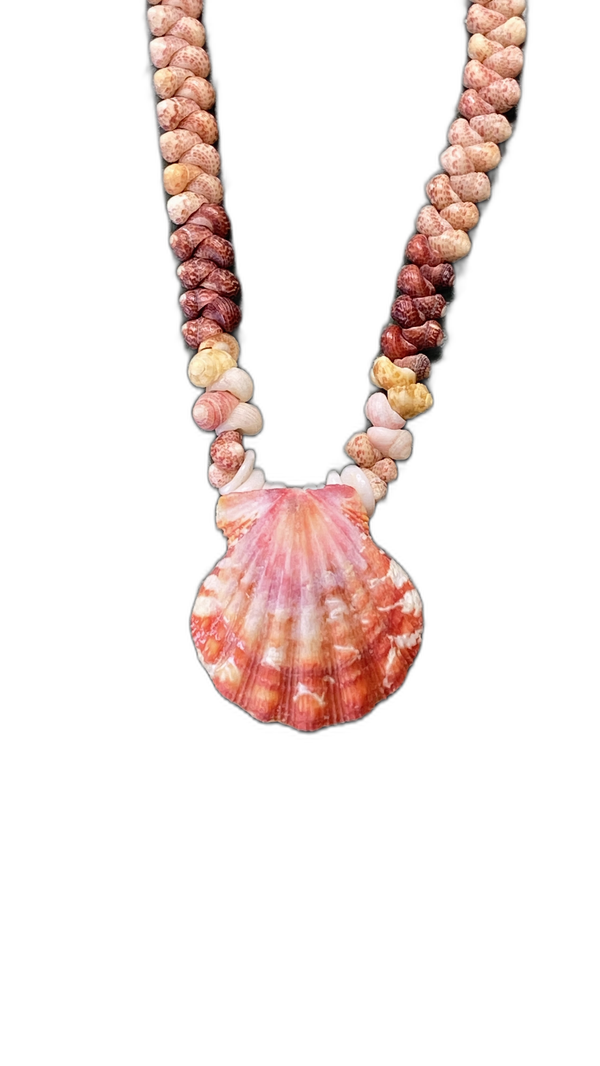
This particular rope carries a sunrise shell (Langford’s Pecten) pendant — a pink-to-coral specimen found after a winter swell off the North Shore. The shell’s color gradient runs from deep coral at the hinge to pale pink at the outer lip, with white marbling through the center ribs. It was drilled at the hinge and wire-wrapped to the strand with sterling silver.
The kahelelani shells nearest the pendant transition through a color gradient: pale bone at the top of the strand, deepening through amber and speckled brown, arriving at rich burgundy just above the pendant. This gradient is not dyed — it represents months of sorting through thousands of shells to find natural specimens that create this progression.

About the Shells
Kahelelani (Leptothyra verruca) are found only on the beaches of Niʻihau, the smallest inhabited Hawaiian island. They range in color from deep amber to pale pearl, with occasional specimens showing a rose or sunset gradient that collectors call “fire shells.”
Each kahelelani shell measures between 2–4mm. Under magnification, the surface reveals a pattern of tiny speckled dashes — coral-brown on cream — unique to every shell. The pattern density and distribution is what separates a museum-grade shell from a beach specimen.
A single strand of matched kahelelani is worth more per gram than gold. Not because of marketing — because of time. The ocean produces them slowly. The sorting takes patience that most people don’t have. The stringing requires hands that don’t shake.

Construction
- Pattern: Herringbone (traditional Niʻihau style)
- Thread: Silk, naturally dyed
- Length: 18 inches (standard lei length)
- Shell count: Approximately 1,200 kahelelani + 1 sunrise pendant
- Pendant: Pink sunrise shell (Langford’s Pecten), wire-wrapped
- Completion time: 11 months
- Clasp: Single puka shell toggle, hand-drilled
The Gradient
The strand’s most distinctive feature is its color architecture. Starting from the clasp:
- Pale bone — the lightest kahelelani, almost white, with faint speckle
- Warm amber — the mid-range shells, even pattern, consistent size
- Deep speckled — darker amber with pronounced dash patterns
- Burgundy transition — the darkest shells, grouped near the pendant
- Momi accent — a few pale momi shells flanking the sunrise pendant
This gradient took three months of sorting alone. Each shell was placed, evaluated against its neighbors, and often replaced — sometimes five or six times before the right match was found.

Provenance
This piece was assembled by Sally Shore Studio on the North Shore of Kauaʻi, using shells acquired through traditional exchange. Each shell was hand-sorted from a collection of approximately 24,000 raw specimens.
The sunrise shell pendant was found at Tunnels Beach after a December swell. It sat in a grading tray for two months before being matched to this particular strand — the coral-to-pink gradient of the shell complementing the amber-to-burgundy gradient of the kahelelani.
Craft baseline. Found at the tideline, assembled by hand.
Local / direct from maker
Exhibition-grade. Documented provenance, archival presentation.
Gallery / wholesale
Vendor-ready. Finished, signed, ready for market.
Retail / craft fair
The mythic tier. Museum-worthy, once-in-a-lifetime finds. The kind of piece that funds a plane ticket.
By appointment only
All pieces are available by conversation, not by cart.
Gallery / wholesale
All pieces are available by conversation, not by cart.