The kahelelani rope is the benchmark.
Every other shell lei is measured against it — not because it is the most beautiful (beauty is a word for people who haven’t spent three months sorting shells smaller than a pencil eraser) but because it is the most difficult. The kahelelani rope is what happens when patience becomes a material, when repetition becomes a medium, when a maker decides that the only acceptable standard is the one that takes the longest to reach.
The Shells
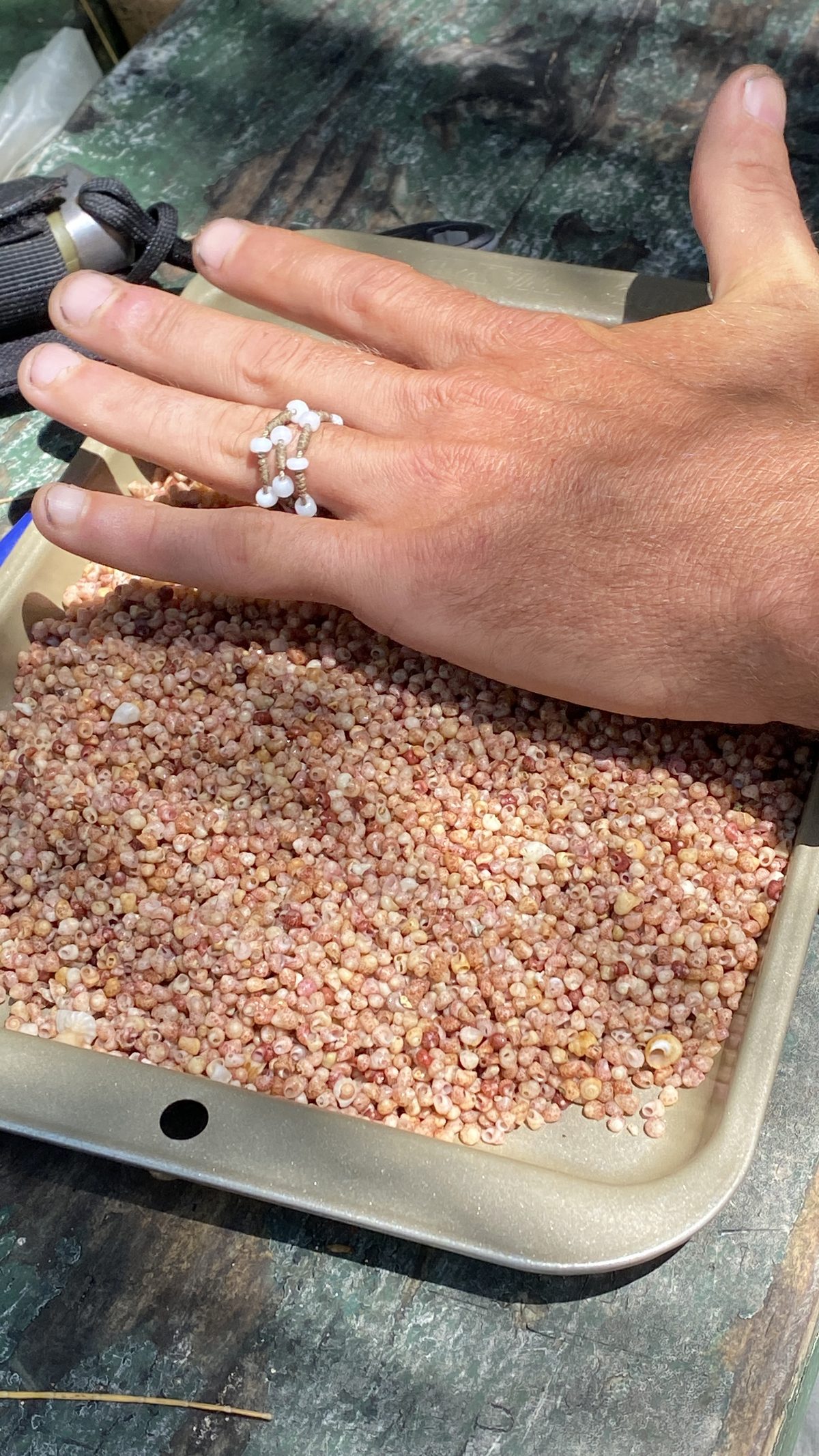
Kahelelani (Leptothyra verruca) are the smallest collectible shells in Hawaiʻi. They come from Niʻihau, mostly, though they wash up on Kauaʻi’s west side after winter storms. The best ones are no larger than a match head. The colors range from deep rust through coral to bone white, with variations so subtle they require sorting under magnification.
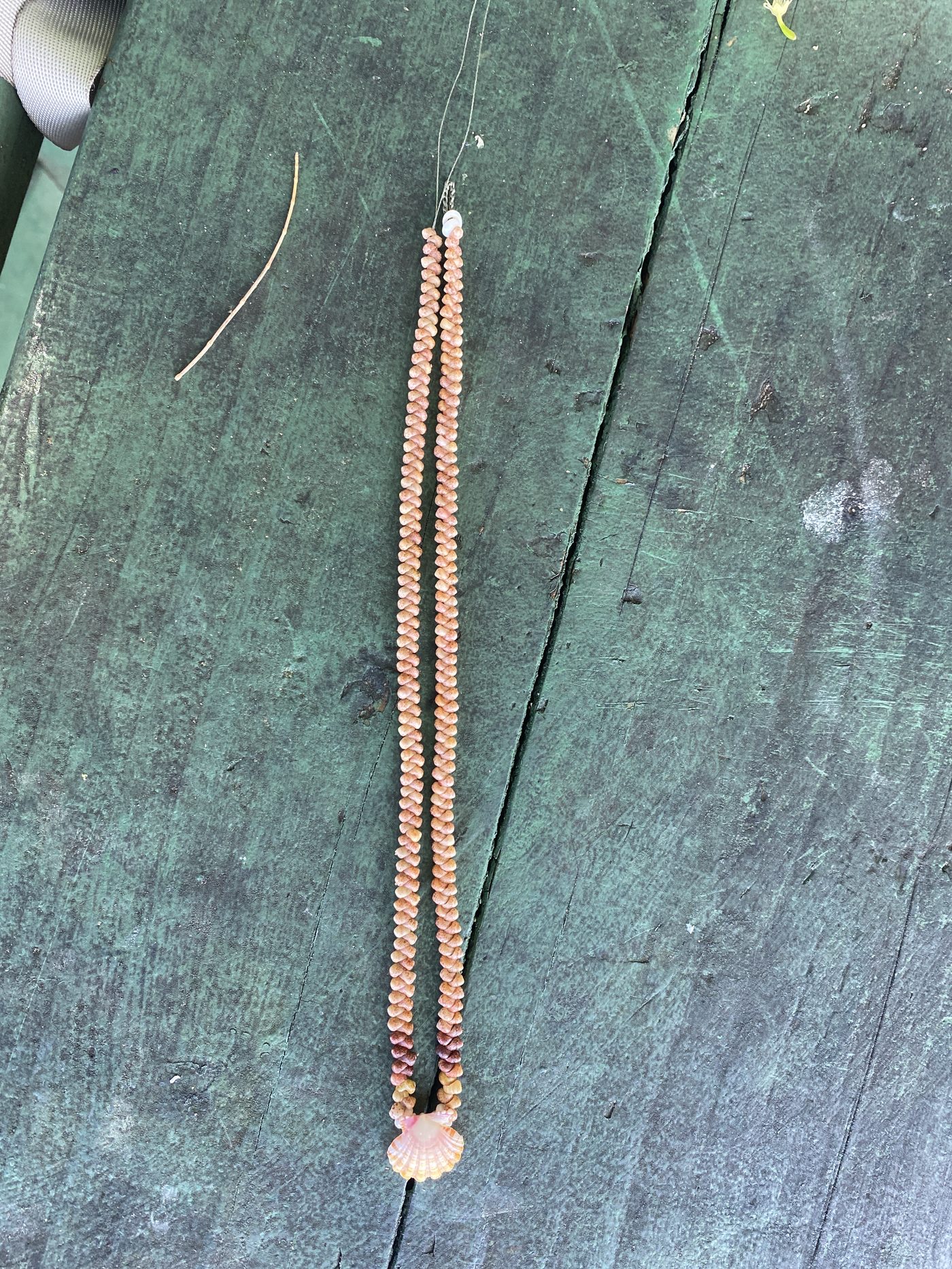
This rope uses approximately 400 shells, sorted into a gradient that runs from dark amber at the clasp to pale bone at the center, then back to amber. The symmetry is intentional. The gradient is the story.
Construction
The rope is twisted — two threads wound around each other with shells threaded between them so each shell sits in its own cradle of tension. This is not stringing. This is architecture. Each shell must be drilled through the center with a hand drill, and each hole must be clean enough that the thread passes without snagging.
A single snag means starting over. Not from the snag — from the beginning.
The kahelelani rope is not jewelry. It is a thesis on the relationship between scale and significance.
All pieces are available by conversation, not by cart.