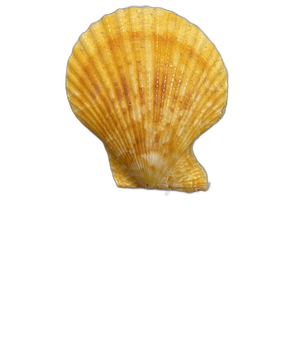
Here is what most people get wrong about puka shells: they think the hole is decorative. They think someone drilled it. They think the ocean left a perfectly centered aperture in a calcium carbonate disc because the universe has a sense of humor and a steady hand.
The ocean has neither. What it has is time. And abrasion. And a complete indifference to whether you find the result beautiful.
The Gradient
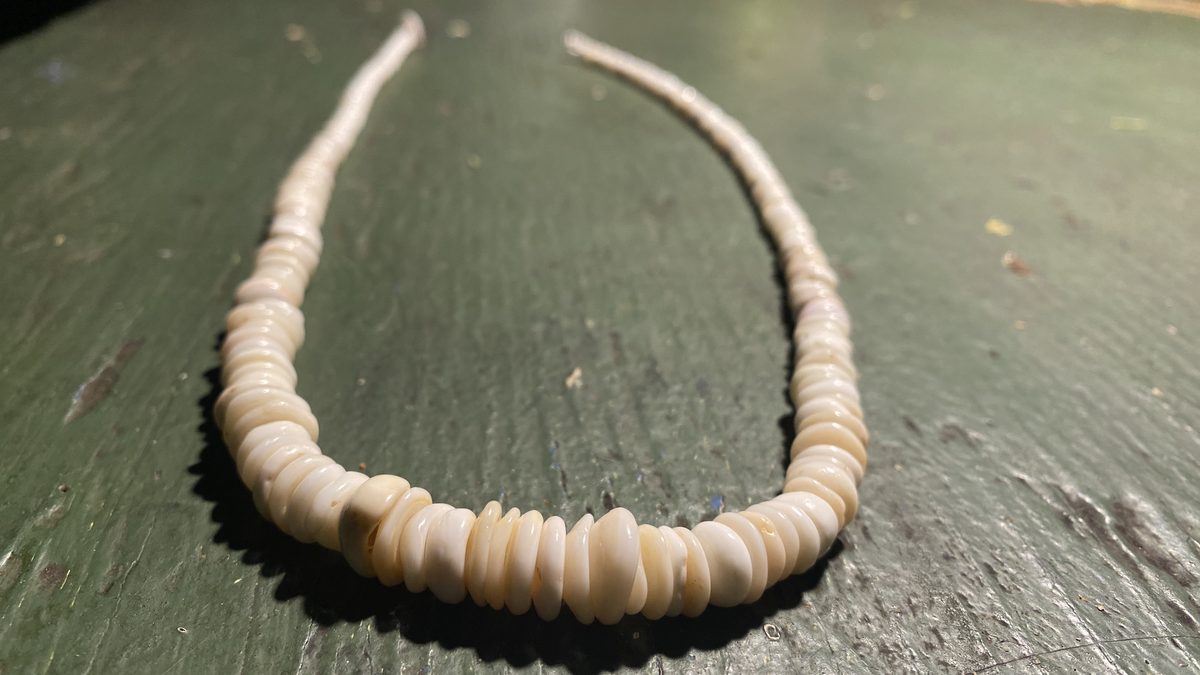
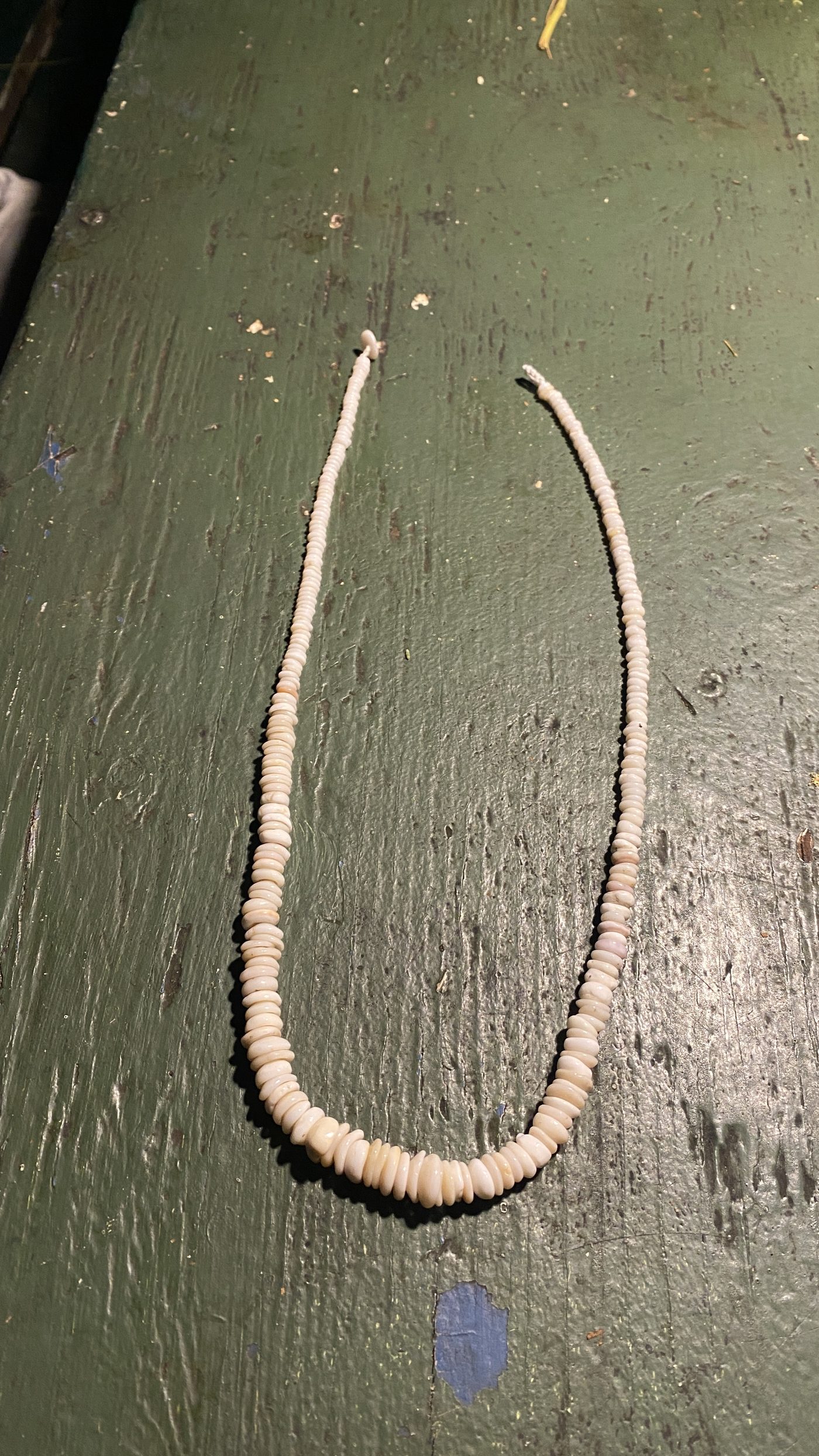
This strand is sorted by diameter. At the clasp, the shells are the size of apple seeds — pale, translucent, almost too delicate to thread. They graduate outward through the arc of the necklace, each shell marginally wider than the last, until the center pieces sit fat and heavy as old coins. The graduation is not mathematical. It is visual. The maker sorted by eye, not caliper, because calipers don’t understand what looks right and the eye does.
The Color
White. But not one white. The small shells at the top carry a yellow warmth — old ivory, beach bone. The larger shells at the center cool into a blue-white that suggests milk in a glass jar. Between them, every variation: shells that are grey at the rim and cream at the center, shells with a faint pink blush that might be mineral deposit or might be the ghost of whatever lived inside them before the ocean decided to redecorate.
The Weight
Heavier than you expect. That is always the tell with real puka — the weight surprises you. Plastic doesn’t surprise anyone. Glass doesn’t surprise anyone. But a hundred fragments of ocean-drilled shell, each one a small act of geological patience, strung on monofilament and hung around a neck — that has a gravity to it that the word “necklace” does not prepare you for.
This is what the ocean makes when you leave it alone long enough. This is what a maker finds when she knows where to look.
Gallery / wholesale
All pieces are available by conversation, not by cart.