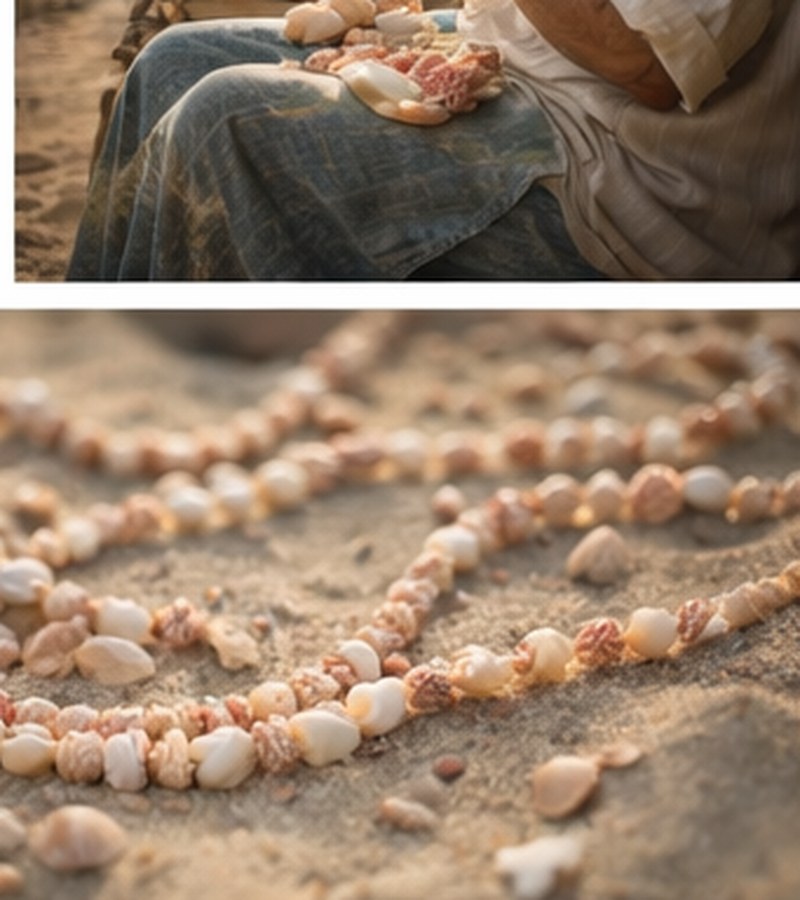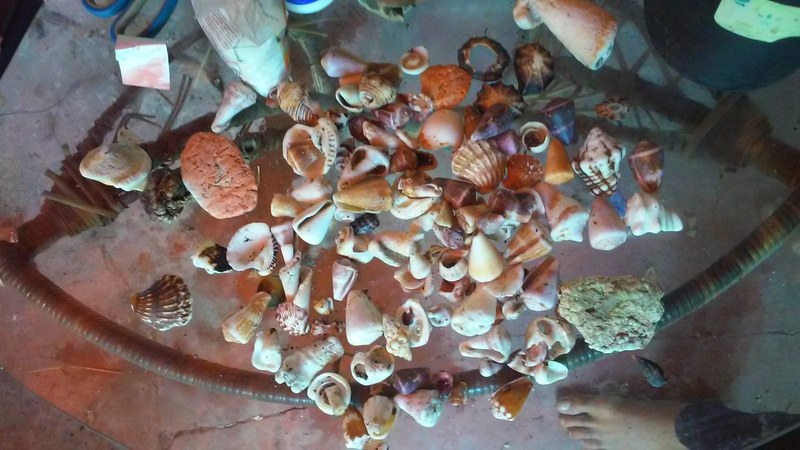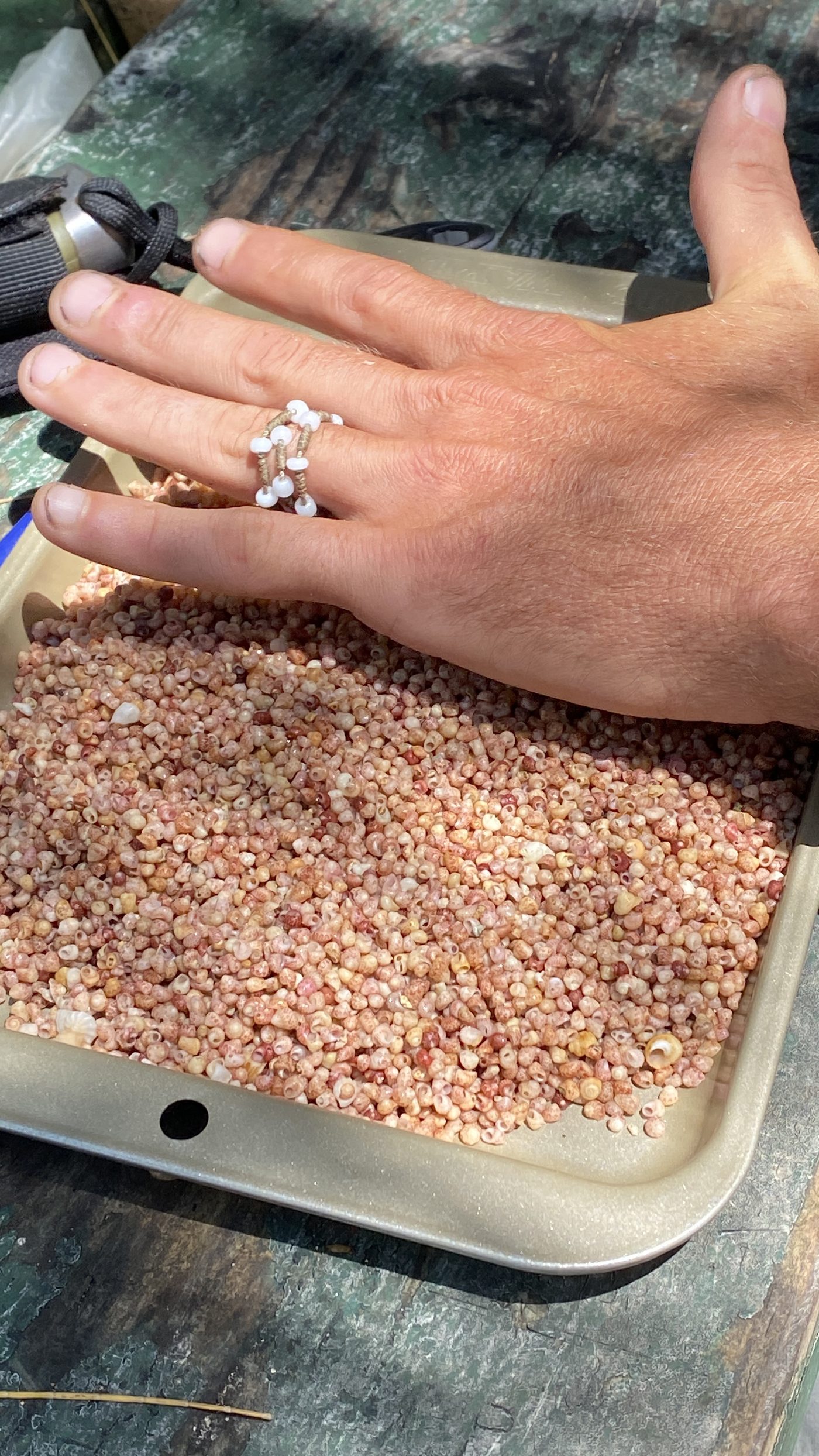
The tray is full and the tray is a liar.
Three hundred kahelelani shells — maybe three-fifty, nobody’s counting because counting is for accountants and we are not accountants, we are shorewalkers — sit in a shallow aluminum pan that once held banana bread and now holds the raw material of something that will take four months to finish and four seconds to dismiss if you don’t know what you’re looking at.
The hand comes down. Fingers spread. Not grabbing — reading. The way a card player fans a deck. The way a jeweler tilts a stone toward the light. The hand moves through the shells like a current through water, sorting without appearing to sort, selecting without appearing to select.
The First Cut
Every necklace begins with rejection.
This is the part the Instagram posts leave out. Before the stringing, before the knotting, before the clasp gets braided and the pendant gets drilled and the whole thing gets laid on a piece of driftwood and photographed in golden-hour light — before all of that, there is the tray. And in the tray, there is judgment.
Too pale. Too dark. Chipped apex. Asymmetric aperture. Wrong weight. Right weight but wrong shape. Right shape but the color reads orange in daylight and salmon in shade, and you can’t have a shell that changes its mind depending on the weather.
Three hundred go in. Maybe eighty come out. The rest go back to the jar, back to the bowl, back to the ocean if they’re truly hopeless, and the ocean accepts them without complaint because the ocean does not have an aesthetic standard. The ocean has everything else — patience, violence, indifference — but it does not have taste. That’s what the maker is for.
The Sorting Station
The station is a green table. Not green by design — green by age, by weather, by whatever paint was on sale at the hardware store in 2003. The surface is scarred and chipped and spattered with things that might be paint or might be history, and the shells sit on it the way artifacts sit in a museum: casually, as if they belong there, as if they have always been there, as if the table was built specifically to hold them.
There is a jar of water. The shells go in wet. Color changes when wet — deepens, saturates, reveals patterns that dry shells hide the way shy people hide their best qualities behind small talk. A shell that looks beige on the table might look amber in the jar. A shell that looks perfect on the table might show a hairline fracture in the jar, visible only through water, the way a lie is visible only through time.
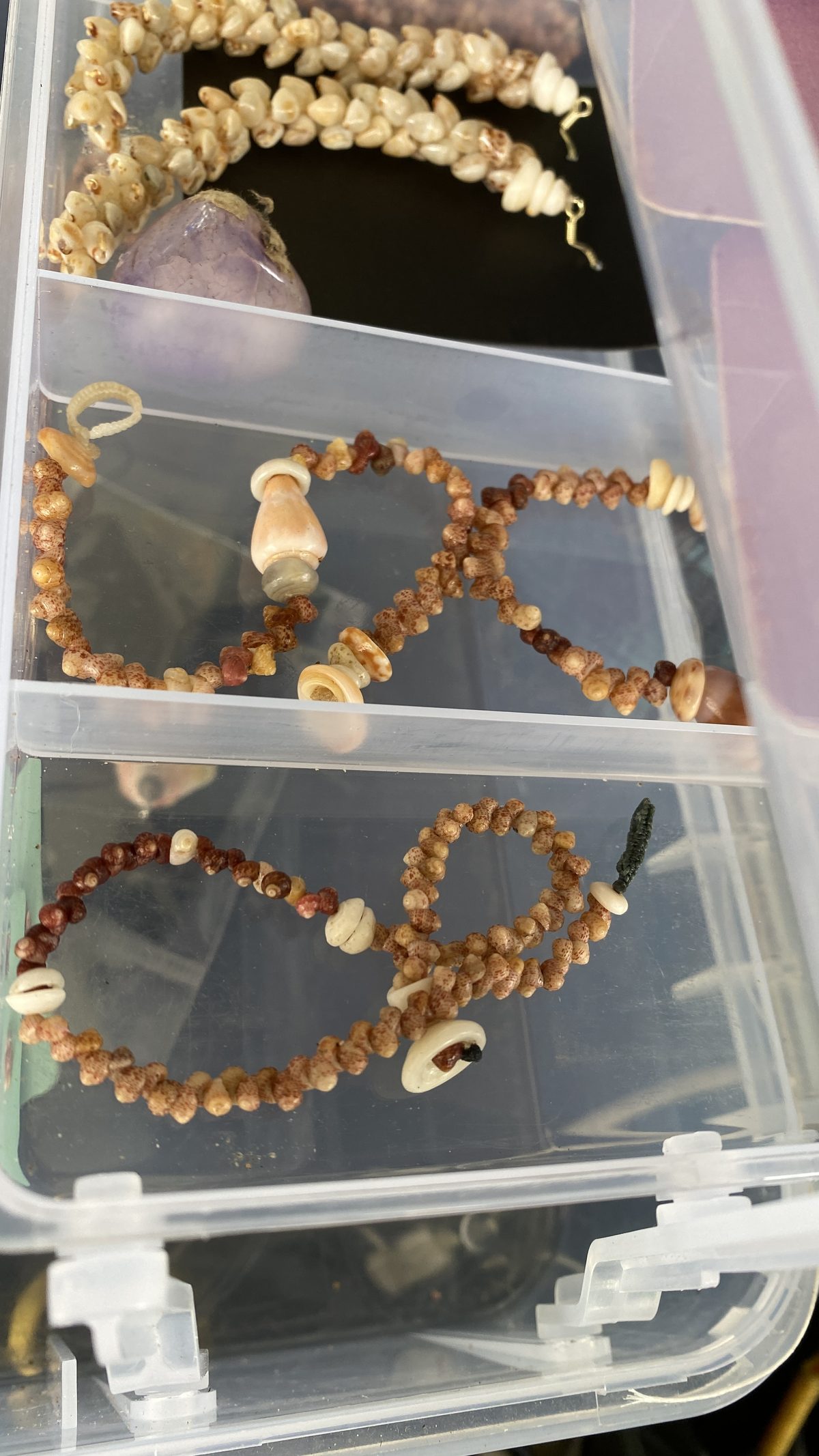
The gold box holds the keepers. Small. Lined with paper. The kind of box that once held earrings from a department store, repurposed now for something the department store could never sell because the department store does not understand that some things are worth more than their price tag suggests, and some things are worth less, and the difference between those two categories is the entire point of this magazine.
What Three Hundred Shells Sound Like
They click. Not like marbles — softer than that. Not like beads — harder than that. Somewhere between rain on a tin roof and dice in a leather cup. The sound of three hundred small calcium structures shifting against each other in an aluminum tray held by hands that have been doing this long enough to hear the difference between a good shell and a great one.
The good shells click clean. The great shells ring.
And the hand keeps moving, and the tray keeps lying, and somewhere between the first sort and the last, a necklace begins to exist in a form that only the maker can see, the way a sculptor sees the statue inside the marble, the way a writer sees the story inside the blank page, the way the ocean sees the shell inside the animal and waits — years, decades, centuries — for the two to separate.
The tray is full and the tray is a liar. But the maker’s hands know the truth. And the truth is: most of these shells are not good enough. And the ones that are — the eighty, the sixty, the precious few that survive the first cut and the second cut and the wet test and the light test and the weight test and the final, brutal, unanswerable test of the maker’s eye — those shells will become something that the tray never promised and the ocean never intended.
They will become a necklace. And the necklace will be beautiful. And no one who wears it will ever know what it cost — not in dollars, but in shells. In the three hundred that didn’t make it. In the fear that none of them would. In the loathing of the ones that almost did.
That is the price of the thing. That is always the price.
More from the Archive
Explore the full collection of stories, spreads, and lore fragments.
Browse Stories