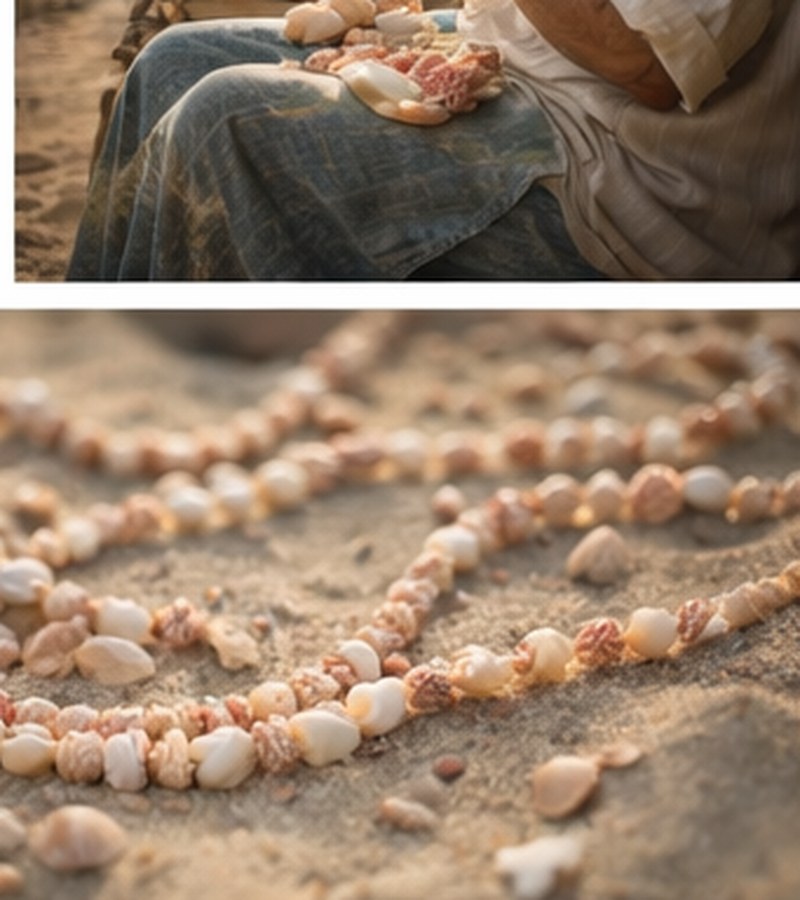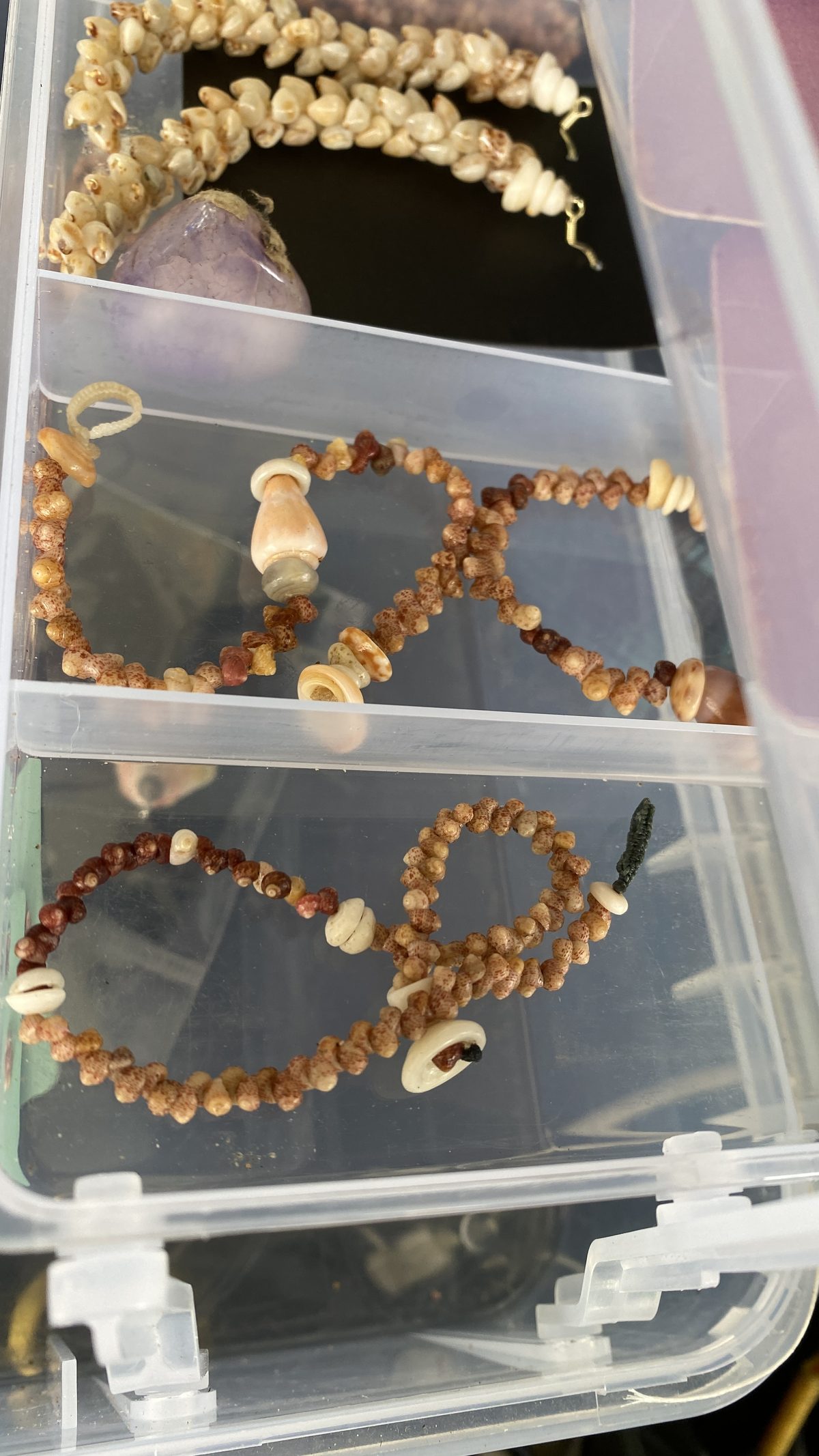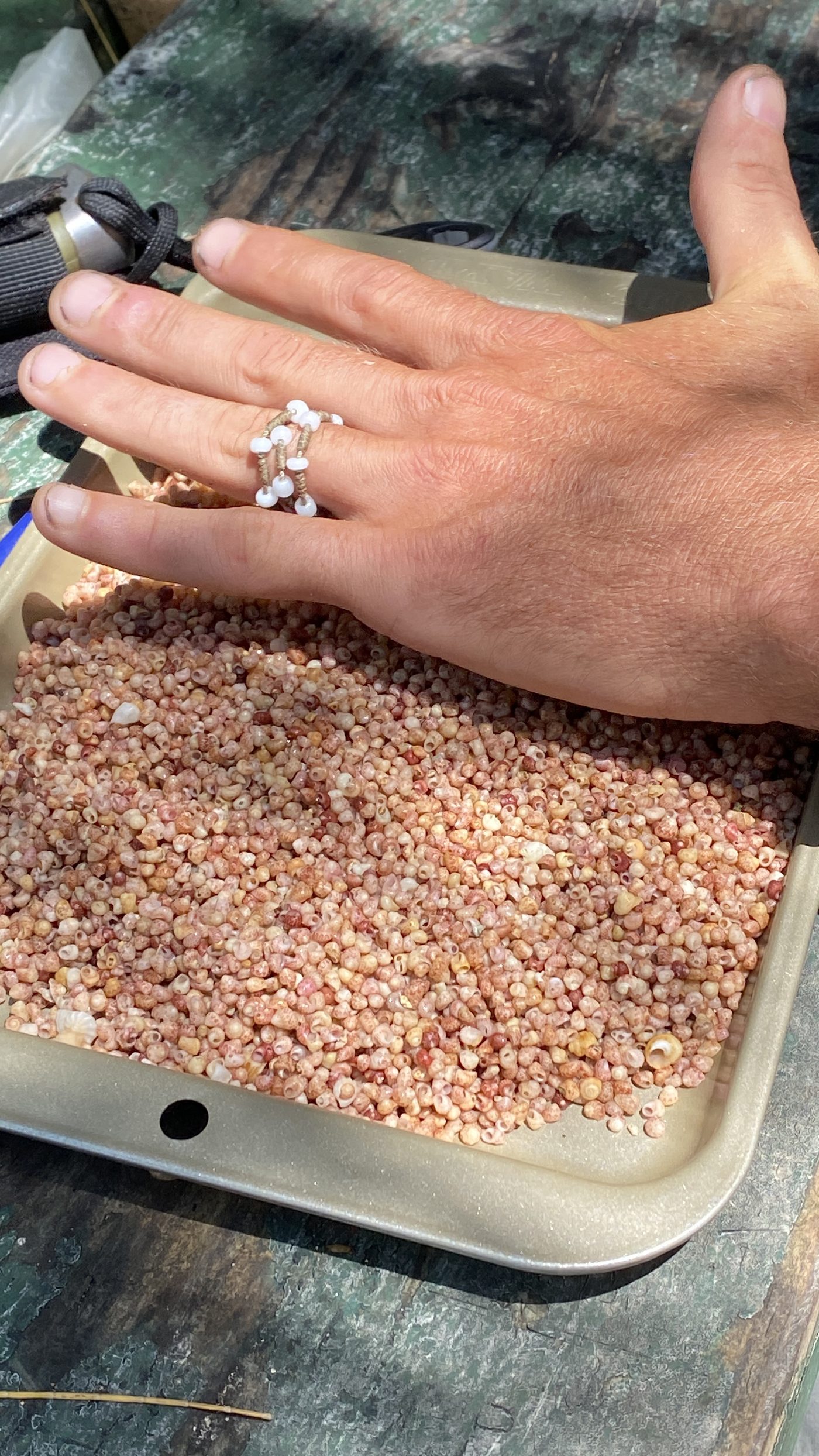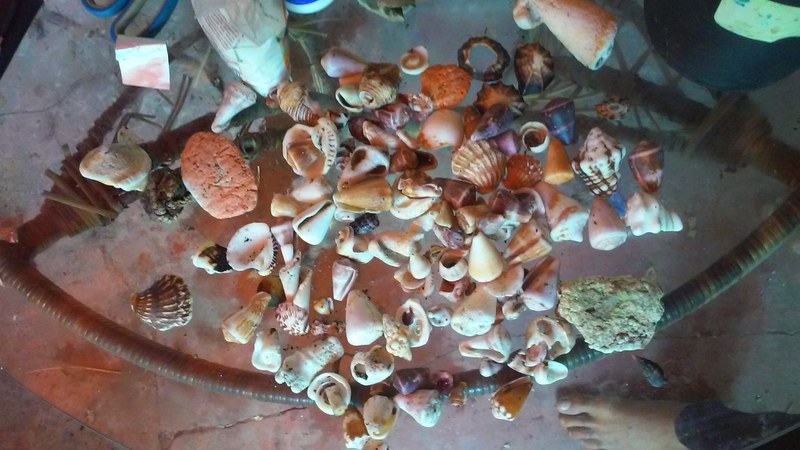
Her hands are the first thing you notice.
Not because they are beautiful — though they are, in the way that old wood is beautiful, or river stone, or anything shaped by repetition and time. You notice them because they never stop moving.
Even when she is talking to you, even when she is looking out at the water, her hands are sorting. The left hand holds. The right hand turns. A shell passes between thumb and forefinger, is evaluated in less than a second, and is placed — left for keep, right for return.
She has done this for forty years. By her own estimate, her hands have sorted a quarter million shells. She can tell a kahelelani from a momi by touch alone, in the dark, underwater.
The Grading
“Most people think it’s about color,” she says, placing a shell so small it could fit inside the letter O on this page. “Color matters. But what I’m really feeling for is density. A good shell has weight. Not heaviness — presence. You can feel it resist your fingertip. A weak shell gives. A good shell pushes back.”
She holds one up to the window. The light passes through it like stained glass — amber at the edges, pearl at the center, with a blush of coral where the whorl begins.
“This one took six months to find a match for,” she says. “Not the color. The temperament.”
The Patience
The work requires a kind of patience that most people confuse with slowness. It is not slow. It is precise. Every decision happens in less than a second. But there are thousands of decisions per strand, and each one is final.
“You can’t go back,” she says. “Once a shell is strung, it’s committed. If you made the wrong call, the whole strand shows it. Not to a tourist. But to anyone who knows.”
The hands remember what the eyes forget. That’s why I sort by touch first, then by sight. The fingers are more honest.
She pauses, looks at the strand she’s been working on — maybe eighty shells in, maybe four hundred to go. The silk thread catches the light. The shells click softly against each other, a sound like rain on a tin roof heard from very far away.
“This is not a job,” she says. “This is a conversation. With the shells. With the thread. With whoever is going to wear this someday.”
She goes back to sorting.
More from the Archive
Explore the full collection of stories, spreads, and lore fragments.
Browse Stories