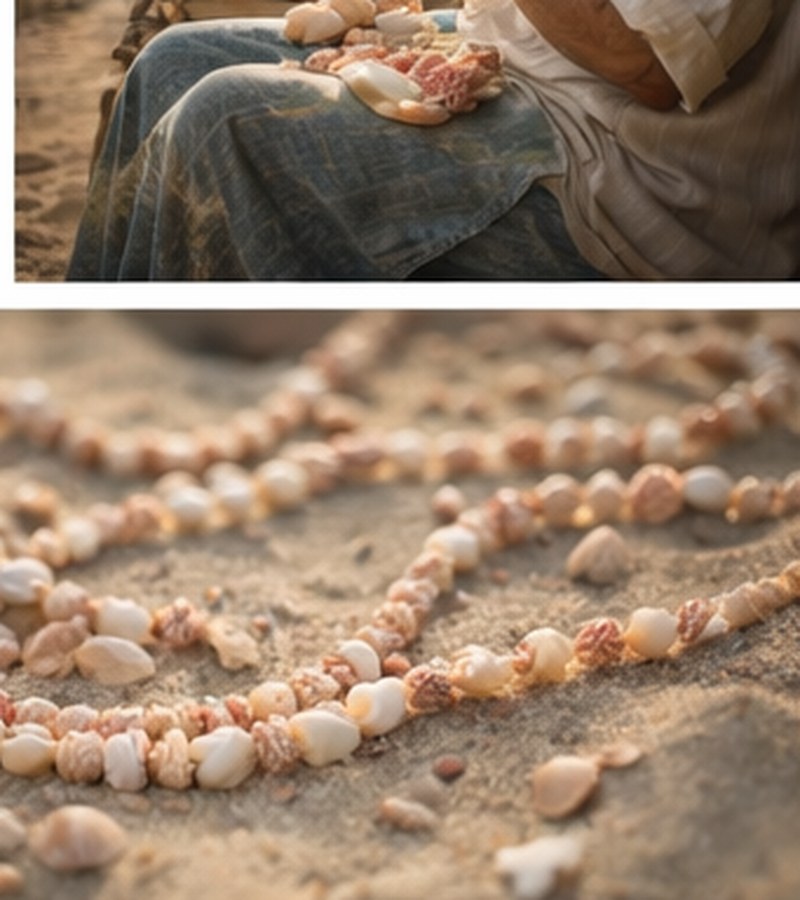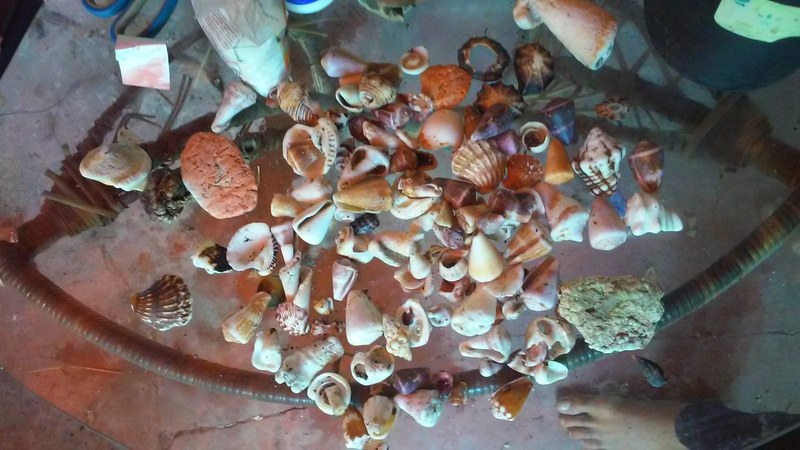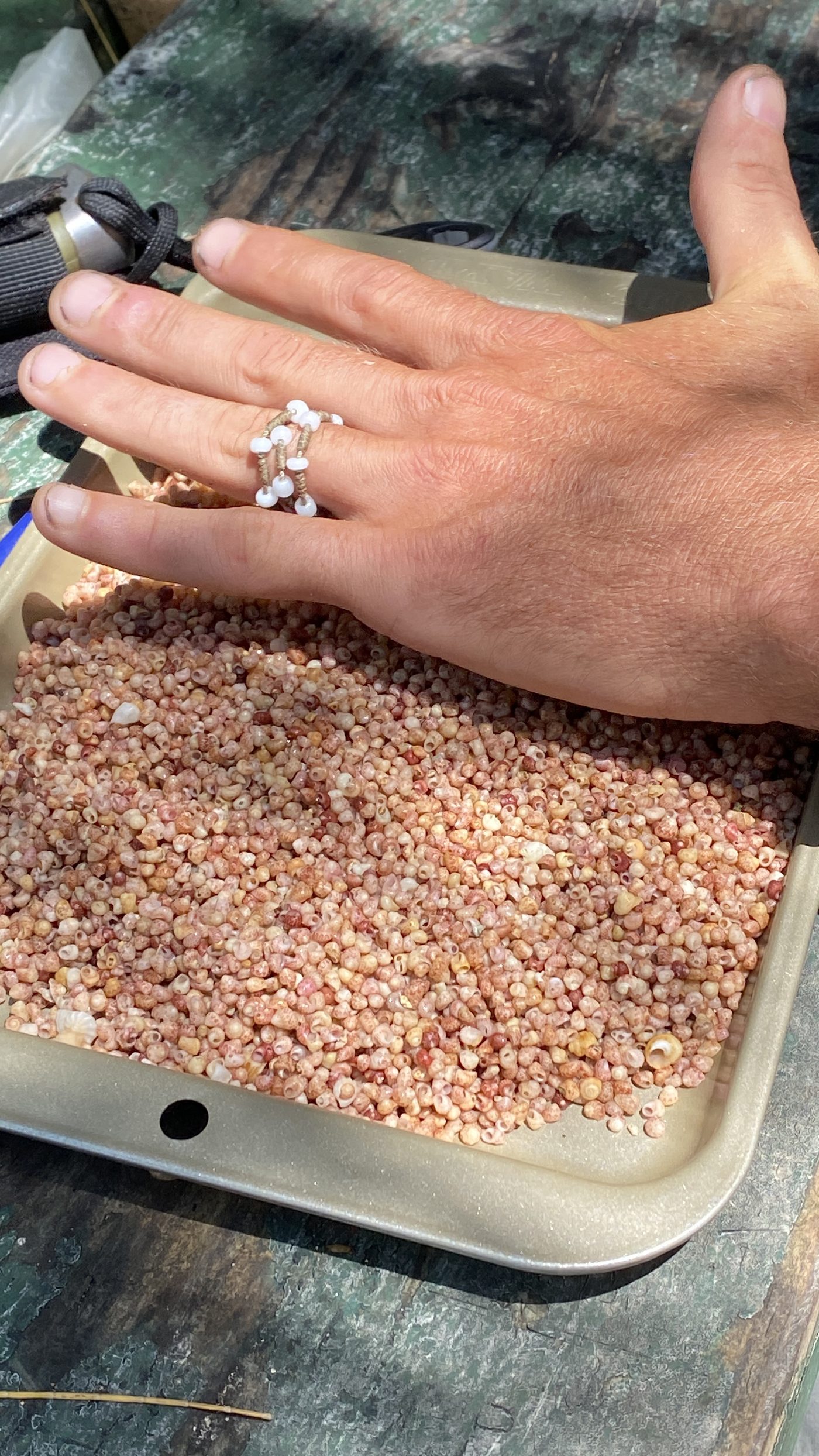
She holds them up — two earrings, each one a column of graduated puka, dangling from gold-fill hooks that catch the pavilion light — and the woman across the table does what everyone does. She reaches for them. Not to buy. To touch. Because the eye cannot believe what the hand has not confirmed, and the hand is the final court of appeals in the jewelry business.
The earrings are small. Maybe two inches. Maybe less. They weigh almost nothing and they cost more than you think they should and less than they’re worth, which is the paradox of every handmade thing that was made by someone who could have been doing something easier and chose not to.
The Pavilion
The market operates under a concrete pavilion at a beach park on the North Shore. No walls. No doors. A roof and some picnic tables and a view of the ocean that would cost you eleven million dollars if it came with a house attached. The vendors set up at dawn and break down at noon, and in between, they sell things that the island made and they finished.
There are other vendors. They sell koa wood bowls and coconut oil and photography prints of waves that look the same in every print because waves, unlike shells, do not have individual identities. The shell maker’s table is in the corner, near the parking lot, which is not the prime real estate but is the right real estate because the people who find her table are the people who were looking for it, and the people who were looking for it are the people who will understand what they find.
The Vault Box
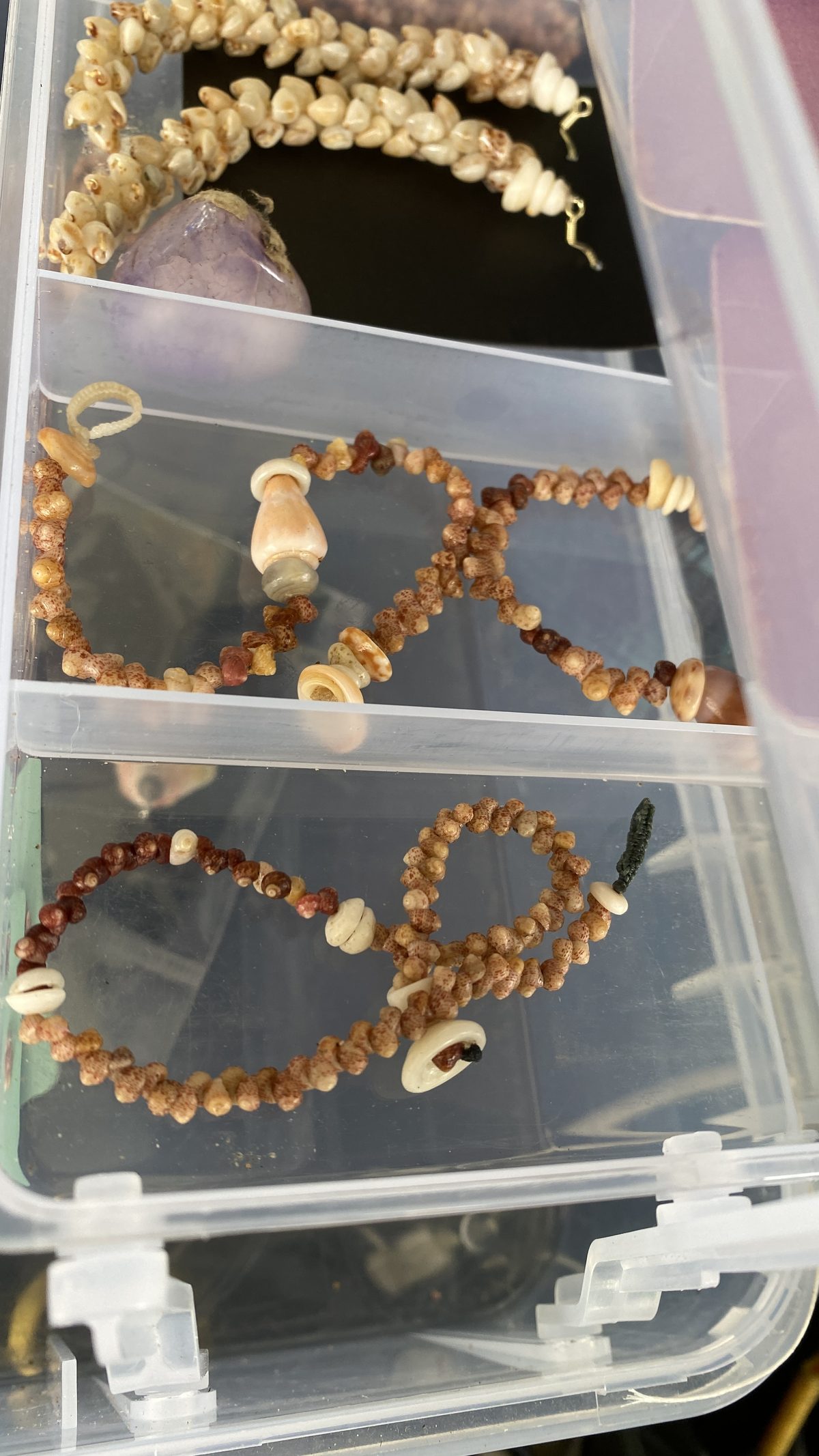
Under the table — and this is the part the casual buyer never sees — there is a plastic organizer. The kind you buy at a craft store for beads or fishing lures or the small, categorized detritus of a life lived in compartments. Inside: kahelelani bracelets, three to a slot. Momi strands coiled like sleeping snakes. A single sunrise shell pendant, wrapped in tissue, waiting for the rope that will carry it.
This is the inventory. This is what the maker brings to market and does not display because displaying it would mean explaining it, and explaining kahelelani to someone who has never sorted them is like explaining color to someone who has never seen it. You can use the right words and still say nothing.
The Sale
The woman buys the earrings. She does not haggle. This is important. She does not ask for a discount or a deal or a two-for-one that would insult the six weeks it took to sort and drill and string the shells that hang from the hooks she is now holding against her ears, tilting her head, checking the mirror that isn’t there because this is a beach pavilion and beach pavilions don’t have mirrors and the maker says, quietly, they look beautiful on you, which is not a sales technique. It is the truth.
The money changes hands. The earrings go into a small paper bag. The woman walks away wearing them anyway, the bag crumpled in her purse, and the maker watches her go the way a painter watches a painting leave the studio — with relief, and pride, and a small, private grief that no one who has never made anything will ever fully understand.
What Remains
The vault box stays under the table. The kahelelani bracelets stay coiled. The sunrise pendant stays wrapped. These are not for the market. These are for the people who come back. Who call. Who write emails that begin with I’ve been thinking about that necklace and end with a wire transfer and a shipping address and a trust that the maker will wrap it properly, which she will, because wrapping is part of the work and the work does not end when the last shell is strung.
The work ends when the piece arrives. When it is opened. When it is held up to light that the maker will never see, in a room the maker will never enter, by hands the maker will never touch.
That is when the lightning reaches ground.
More from the Archive
Explore the full collection of stories, spreads, and lore fragments.
Browse Stories