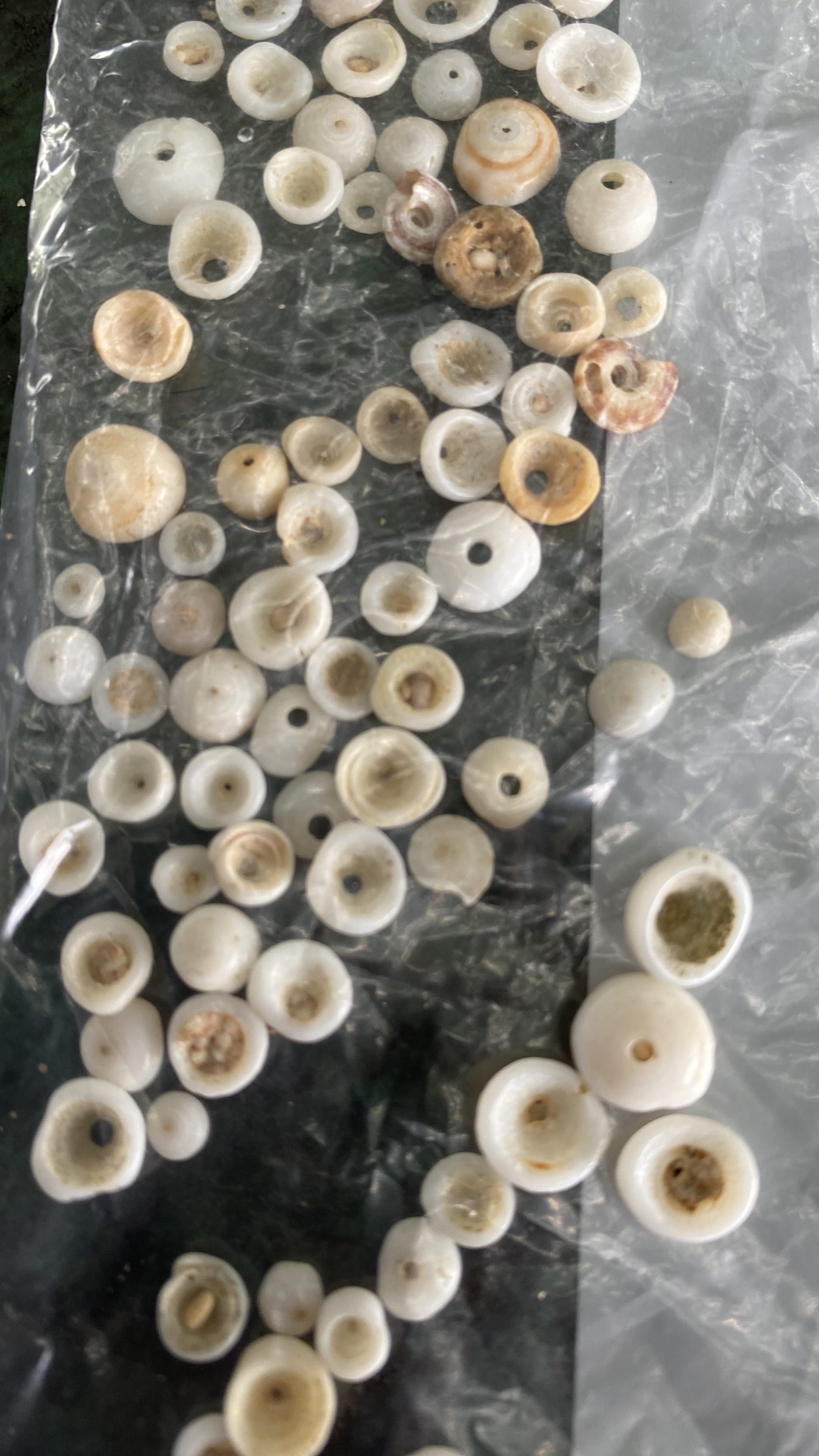
The puka shells are spread across a strip of plastic like casualties on a battlefield, and that is not a metaphor. Every one of them is dead. Every one of them has been dead for years. The ocean killed them, stripped them, drilled them, polished them, and deposited them on a beach where someone with better eyesight than mine picked them up one by one between tides.
Three hundred shells. For one bracelet.
Let that number sit in your mouth for a moment. Three hundred. Not three hundred collected — three hundred selected. The collection number is higher. Much higher. Because for every shell that makes the cut, four or five don’t, which means someone walked a beach picking up fifteen hundred tiny white discs, bringing them home in a jar, pouring them onto plastic, and beginning the brutal, necessary, unromantic work of deciding which ones deserve to exist as jewelry and which ones deserve to go back in the jar.
The Criteria
A puka shell must be round. Not oval, not oblong, not the vaguely circular shape that your brain wants to call round because your brain is lazy and rounds up. Round. The maker uses no tool to measure this. The maker uses her eye, which has been trained by ten thousand shells to recognize the difference between round and almost round, and almost round goes back in the jar.
A puka shell must be flat. Not cupped, not domed, not warped by the thermal cycling of a tide pool that heats to ninety degrees at noon and cools to sixty-five by sunset. Flat. The kind of flat that stacks. The kind of flat that, when strung, creates a column of uniform discs that looks less like a bracelet and more like a small, wearable abacus designed by someone who counts only in beautiful things.
A puka shell must be drilled by the ocean. This is non-negotiable. The maker does not drill puka shells. The maker believes — and she will argue this point with the fervor of a theologian defending a creed — that a human-drilled puka is a lie. The ocean drills puka shells through abrasion, through the slow, patient, geological violence of sand and water and time, and the resulting hole is never perfectly centered and never perfectly round and that is the entire point. A machine-drilled hole is a shortcut. A shortcut through a puka shell is a shortcut through the truth.
The Bracelet
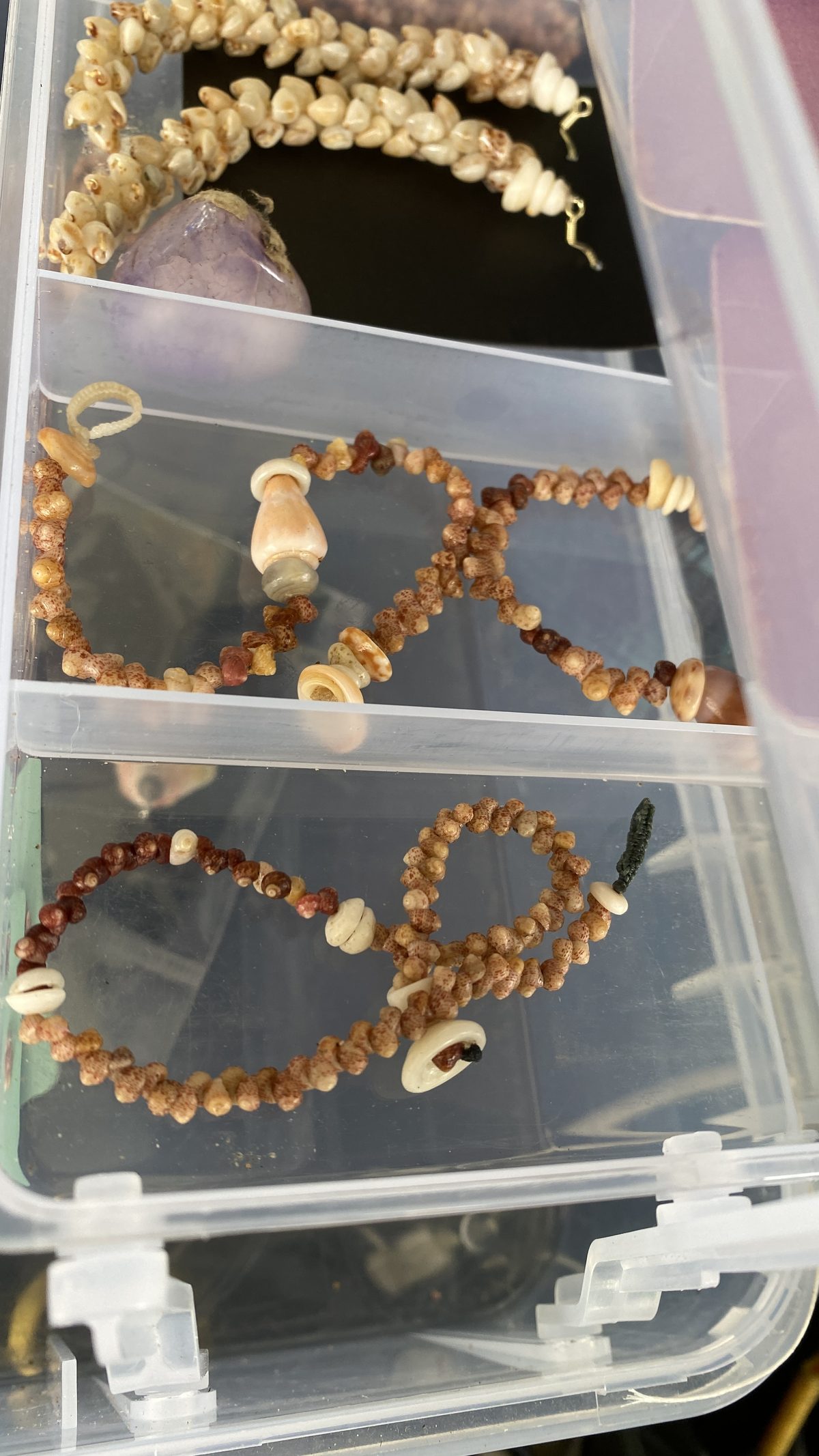
When it’s done — and done is a word the maker uses reluctantly, the way a surgeon uses closed, meaning the operation is over but the recovery hasn’t started — the bracelet weighs more than it looks. This is the first thing you notice. The second thing you notice is the sound: a dry, mineral click, like small stones in a dry creek bed. The third thing you notice is that you’re still holding it, that you haven’t put it down, that your thumb is running along the edge of the shells the way a reader’s thumb runs along the pages of a book that has more to say than the reader expected.
The bracelet is on a wrist now. Not a mannequin’s wrist — a real wrist, with real tendons and real veins and real skin that has been in real sun and real salt water. The shells sit against the skin like they were grown there. Like the wrist was incomplete without them. Like the ocean had been making this bracelet for the wrist’s entire life and only now, finally, got around to delivering it.
Three hundred shells. One bracelet. And the jar is still full.
The jar is always full.
More from the Archive
Explore the full collection of stories, spreads, and lore fragments.
Browse Stories